
Shaping a Future-Ready Digital Publishing Ecosystem in a Market Moving Towards $4.39 Billion
The global digital publishing market is projected to grow from $2.93B in 2025 to $4.39B by 2030, with an 8.20% CAGR, driven by rising demand for structured metadata, multilingual indexing, and open-access compliance. Institutions and societies now require unified platforms that improve visibility, streamline editorial workflows, and ensure global discoverability across research networks and library systems.

Client Overview
Academic publishers across the US are facing increasing pressure as more research gets published, compliance requirements tighten, and global visibility becomes more challenging to maintain. Fragmented workflows among authors, editors, reviewers, and distribution partners make it difficult to keep accurate metadata, comply with open-access mandates, and deliver content to discovery systems on time.
To overcome these challenges, a leading US-based academic publishing service partnered with BOSC Tech Labs to build a unified digital publishing ecosystem. They needed an end-to-end platform that could streamline editorial workflows, automate multilingual metadata, centralize Digital Object Identifier (DOI) & indexing operations, and ensure global discoverability for journals, books, and conference proceedings.
Industry:
Media & Publishing
Country:
U.S.A
Services Provided:
Frontend, Backend, and Server Hosting
Client Goal
-

A unified workflow for submissions, editorial tasks, peer review, and production
-
Automated metadata generation and multilingual tagging at scale across publications
-
Centralized DOI registration and indexing across global discovery systems
-
Support for open-access, subscription, and hybrid publishing models
-
Advanced dashboards for citation tracking, content performance, and operational visibility
Business Challenges
-
Fragmented tools and manual coordination caused inconsistent, error-prone metadata across journals, books, and conference proceedings.
-
The absence of automated workflows meant editors and reviewers had limited visibility into submission status, review progress, and production timelines.
-
Metadata, DOI registration, and indexing were handled separately, resulting in publication delays and reduced global discoverability.
-
Multilingual content was difficult to standardize, making accurate tagging, formatting, and compliance verification more challenging to maintain at scale.
-
Disconnected editorial and distribution processes made it difficult to ensure timely delivery to libraries, repositories, and research networks.
-
Limited analytics restricted insights into citation trends, readership patterns, and content performance, slowing strategic decision-making.
The BOSC Tech Labs’ Approach
The focus was on building a unified publishing ecosystem that supports the complete lifecycle of academic content. The BOSC Tech Labs team began by studying how manuscripts moved through submission, review, editing, production, and indexing, in close collaboration with the client’s editorial and operations teams.
Our approach combined research on publishing workflows, process standardization, and precise technical execution to ensure the platform improved accuracy, compliance, and discoverability without disrupting how publishers, editors, and reviewers work today.
-

Conducted a detailed discovery phase with authors, editors, reviewers, and production teams to understand daily workflows, coordination gaps, and points where delays commonly occurred.
-
Mapped the end-to-end publishing pipeline, which includes submissions, peer review, revisions, production, metadata tagging, DOI registration, indexing, and distribution, to identify where automation would deliver the highest reliability and speed.
-
Analyzed existing metadata structures, multilingual requirements, and compliance expectations to design standardized schemas aligned with international publishing standards.
-
Evaluated different metadata and indexing automation strategies before selecting a pipeline optimized for accuracy, multilingual scalability, and compatibility with major discovery platforms.
-
Designed automation modules for metadata tagging, DOI registration, and indexing exports to reduce manual effort and eliminate inconsistencies across publications.
-
Built integrated editorial and peer-review workflows that provide real-time visibility into submission status, review progress, and production timelines.
-
Developed centralized dashboards that translate complex publication data, such as citation activity, readership metrics, and indexing performance, into actionable insights for editorial teams and institutions.
-
Implemented seamless connectors for distribution channels, repository systems, and library networks to ensure publications reached global discovery platforms on time.
-
Adopted Agile development cycles to incorporate feedback from the client’s editorial board, streamline user experience, and continuously refine platform behavior across different publication types.
-
Ensured the platform remained flexible and non-disruptive, supporting existing publishing practices while offering the scalability needed for journals, books, and conference proceedings.
Technologies






Let’s connect and build a technology that shapes tomorrow.

The Business Impact
| Area | Before Acadira | After Acadira |
|---|---|---|
| Metadata Accuracy | Manual, inconsistent, and error-prone entries | Automated, standardized, and multilingual-ready metadata |
| Editorial Workflow Visibility | Limited tracking & needed manual updates | Real-time visibility across submissions, reviews, and production |
| DOI & Indexing Operations | Separate steps & frequent delays | Centralized & automated workflows with timely indexing deposits |
| Multilingual Publishing | Difficult to standardize at scale | Automated tagging and compliance-ready multilingual support |
| Distribution to Libraries & Repositories | Manual uploads and inconsistent delivery | Seamless, automated distribution to global discovery systems |
| Publication Timelines | Slowed by coordination gaps | Faster & unified publishing lifecycle with fewer handoffs |
| Citation & Readership Insights | Limited or unavailable | Dashboard-driven analytics for citations, readership, and performance |
| Scalability | Difficult as the publication volume increased | Scalable platform supporting journals, books, and conference proceedings |
| Operational Efficiency | Fragmented tools and manual tasks | Unified platform reducing workload and speeding decision-making |
The Impact at a Glance
This platform delivers a strong global digital presence, attracting millions of readers annually, driving consistent monthly engagement, enabling hundreds of thousands of content downloads, and building a trusted community across 180+ countries.

10M+ Annual Page Views

1.2M+ Monthly Active Users

300K+ Yealy Article Downloads

180+ Countries with Users

Solution we Provided
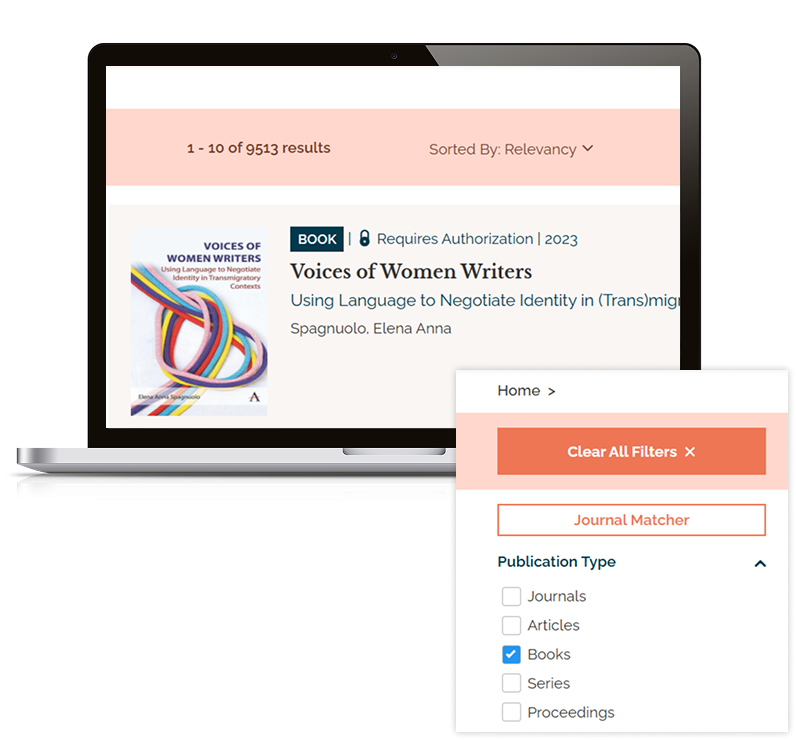
We built Acadira, a unified digital publishing ecosystem that centralizes submissions, peer review, production workflows, metadata processing, DOI registration, and global indexing into a single platform. The system was engineered to align with how academic teams already operate, enabling editors, reviewers, and publishers to work seamlessly without disrupting their existing processes.
End-to-End Editorial & Peer Review Workflow
We created an integrated workflow that connects submissions, reviews, revisions, and production. Teams can track every stage in real time, reducing manual coordination and email-based follow-ups.
Automated Metadata & Multilingual Tagging
Acadira automates metadata creation and multilingual tagging for all publication types. This ensures consistency, compliance, and reduced manual errors across journals, books, and proceedings.
Centralized DOI & Indexing Management
A dedicated module manages DOI registration and indexing from one place. Automated exports ensure publications are discovered by global discovery systems on time.
Production Support for Multi-Format Publishing
We enabled structured production workflows for journals, books, and conference proceedings, helping teams prepare final outputs faster and more consistently.
Citation & Performance Dashboards
Dashboards provide insights into citations, readership, indexing status, and publication timelines. Editorial teams gain clearer visibility into content performance.
Integrations with Libraries & Repositories
We built connectors for library networks, repositories, and indexing platforms to streamline distribution without manual uploads.
Scalable & Secure Hosting
Acadira runs on a scalable hosting environment that supports growing content volume while ensuring reliability, security, and fast performance.
Non-Disruptive Implementation
The system integrates seamlessly with existing practices, allowing editors, reviewers, and publishers to continue working as usual while benefiting from enhanced automation and visibility.
Let’s Build Something Impactful
Share your requirements and we’ll help you design a scalable AI-driven solution.